## Introduction
Your child has autism. They understand language. They have things they want to say. But when they try to speak, their words don’t come out clearly—or they don’t come out at all.
This is often childhood apraxia of speech (CAS), and it’s one of the most misunderstood speech challenges in children with autism.
Parents frequently confuse CAS with other speech disorders. Teachers sometimes assume the child can’t think in language. And many children go years without proper diagnosis because CAS is less common than other speech disorders but overlaps significantly with autism.
This guide walks you through what CAS is, how it differs from other speech challenges, and how specialized therapy—combined with ABA—helps children with apraxia develop speech and communication.
## What Is Childhood Apraxia of Speech (CAS)?
Childhood Apraxia of Speech is a motor speech disorder that affects how a child’s brain plans and sequences the movements needed to produce speech sounds.
**Here’s the critical distinction:** A child with CAS understands language and knows what they want to say. Their challenge isn’t language understanding or thinking. Their challenge is executing the motor movements required for speech.
Think of it like this:
– **Language disorder:** The child struggles to understand words or express ideas
– **Articulation disorder:** The child has weak mouth muscles or can’t produce individual sounds correctly
– **Apraxia:** The child knows what they want to say and their mouth muscles work fine, but their brain can’t sequence the movements to say it clearly
## Signs of Childhood Apraxia in Autism
Children with CAS often show a distinctive profile:
### Speech Characteristics
– **Inconsistent errors:** The same word is pronounced differently each time (“cat” might be “cat” one time, “tat” another time, “t” a third time)
– **Vowel distortions:** Trouble with vowel sounds, especially in longer words
– **Limited consonant-vowel combinations:** Struggle with syllable structures like CVCV (consonant-vowel-consonant-vowel)
– **Slow speech rate:** Speaking very slowly or with long pauses between syllables
– **Prosody problems:** Unusual rhythm, stress, or intonation patterns
### Developmental Red Flags
– **Few words by age 2:** Limited vocabulary despite understanding
– **Limited sound inventory:** Using only a few consonant and vowel sounds
– **Inconsistent production:** Same words sound different each time
– **Difficulty with repetition:** Can’t imitate words on demand, even though they might say them spontaneously
– **Groping behaviors:** Visible mouth movements as the child searches for correct placement
### Language and Autism Overlap
– Difficulty with pragmatic language (using language socially)
– Reduced babbling as an infant
– Echolalia (repeating words without understanding)
– Difficulty with sentence development despite understanding
– Frustration leading to behavioral challenges
## CAS vs. Other Speech Disorders: How to Tell the Difference
### CAS vs. Articulation Disorder
| Feature | CAS | Articulation Disorder |
|———|—–|————————|
| **Consistency** | Inconsistent (varies each time) | Consistent (same error pattern) |
| **Imitation** | Difficulty repeating sounds/words | Can imitate correctly |
| **Sound inventory** | Very limited | May have larger inventory |
| **Language understanding** | Typically intact | Typically intact |
| **Response to therapy** | Slow, requires intensive intervention | Often responds quickly |
### CAS vs. Language Disorder
| Feature | CAS | Language Disorder |
|———|—–|————————|
| **Understanding** | Comprehends language well | Struggles to understand |
| **Speech clarity** | Unintelligible due to sequencing | May be intelligible but incorrect grammar |
| **Motor execution** | Motor planning difficulty | Language formulation difficulty |
| **Word retrieval** | Often intact | Often impaired |
## How to Get a CAS Diagnosis
Getting an accurate diagnosis is critical because CAS requires specific, intensive treatment.
### Step 1: Get a Comprehensive Speech-Language Evaluation
A speech-language pathologist (SLP) should evaluate:
– Speech sound consistency across different contexts
– Oral motor function and strength
– Language comprehension and expression
– Play and pragmatic language skills
– Stimulability (ability to imitate sounds)
### Step 2: Confirm with a Specialist
If CAS is suspected, ask for a referral to an SLP with specific apraxia training. Many SLPs don’t specialize in CAS, and early misdiagnosis is common.
### Step 3: Rule Out Other Conditions
Your child’s evaluation should rule out:
– Cerebral palsy or other neurological conditions
– Hearing loss
– Structural abnormalities (tongue-tie, cleft palate)
– Severe language disorder
– Dysarthria (weak muscles)
## Evidence-Based Therapies for CAS
### Speech Therapy Approaches
**1. Integral Stimulation (Imitation-Based)**
– SLP models the word, child imitates
– Therapist provides tactile and verbal cues
– Gradually reduces cues as child improves
– Highly effective for CAS
**2. PROMPT Therapy (Tactile-Kinesthetic)**
– Therapist uses touch cues to guide jaw, lips, tongue movements
– Helps child learn correct motor sequences
– Particularly effective for children who respond to tactile input
– Often combined with other approaches
**3. Motor Planning Activities**
– Repetitive practice of sound sequences
– Slow, deliberate production with exaggeration
– Build from simple (CV) to complex (CCVCC) structures
– Multisensory input (visual, auditory, tactile)
**4. Naturalistic Environment Teaching**
– Practice sounds in meaningful contexts
– Use words the child wants to say
– Incorporate into play and daily activities
– Generalizes skills across settings
### Intensity Matters
Research is clear: children with CAS need **intensive** speech therapy. This means:
– 2-5+ sessions per week (not 1 session)
– Individual therapy (not group)
– Highly structured, focused goals
– Family coaching for home practice
– Duration of months to years
A child receiving one speech therapy session weekly will progress much more slowly than one in intensive therapy.
## The ABA-Speech Therapy Connection
ABA and speech therapy are complementary for children with autism and CAS:
### ABA Supports Speech Development By:
– **Reducing challenging behaviors** that interfere with communication attempts
– **Building motivation** for communication through meaningful reinforcement
– **Teaching social communication** (pragmatics, turn-taking, joint attention)
– **Generalizing skills** across settings and people
– **Creating structured practice** opportunities throughout the day
– **Supporting independence** in communication
### How They Work Together
– Speech therapist targets motor speech goals (sound production, sequencing)
– ABA therapist incorporates speech practice into everyday routines
– Both use data to track progress and adjust strategies
– Family gets consistent coaching from both disciplines
– Child gets multiple opportunities to practice throughout the day
## What Progress Looks Like
Progress in CAS is slow and steady. Parents shouldn’t expect quick fixes.
### Early Progress (Months 1-3)
– Increased sound inventory (more consonant and vowel sounds)
– Better consistency in words worked on in therapy
– Increased communication attempts
– Reduced frustration (sometimes)
### Medium-Term Progress (Months 3-6)
– Words become more intelligible
– Spontaneous use of new sounds in untargeted words
– Longer utterances possible
– Better carry-over to home and school
### Long-Term Progress (6+ Months)
– Conversation becomes more intelligible to listeners
– Child can produce multi-syllable words
– Prosody and rhythm improve
– Child may finally be understood by unfamiliar listeners
## What Parents Can Do At Home
### Create Practice Opportunities
– Practice targeted sounds during play, meals, and transitions
– Use words *your child wants to say* (not random words)
– Keep practice sessions short (5-15 minutes)
– Make it fun, not forced
### Support Your Child’s Communication
– Give them time to speak—don’t rush or interrupt
– Listen for what they’re trying to say
– Celebrate approximations, not just perfect production
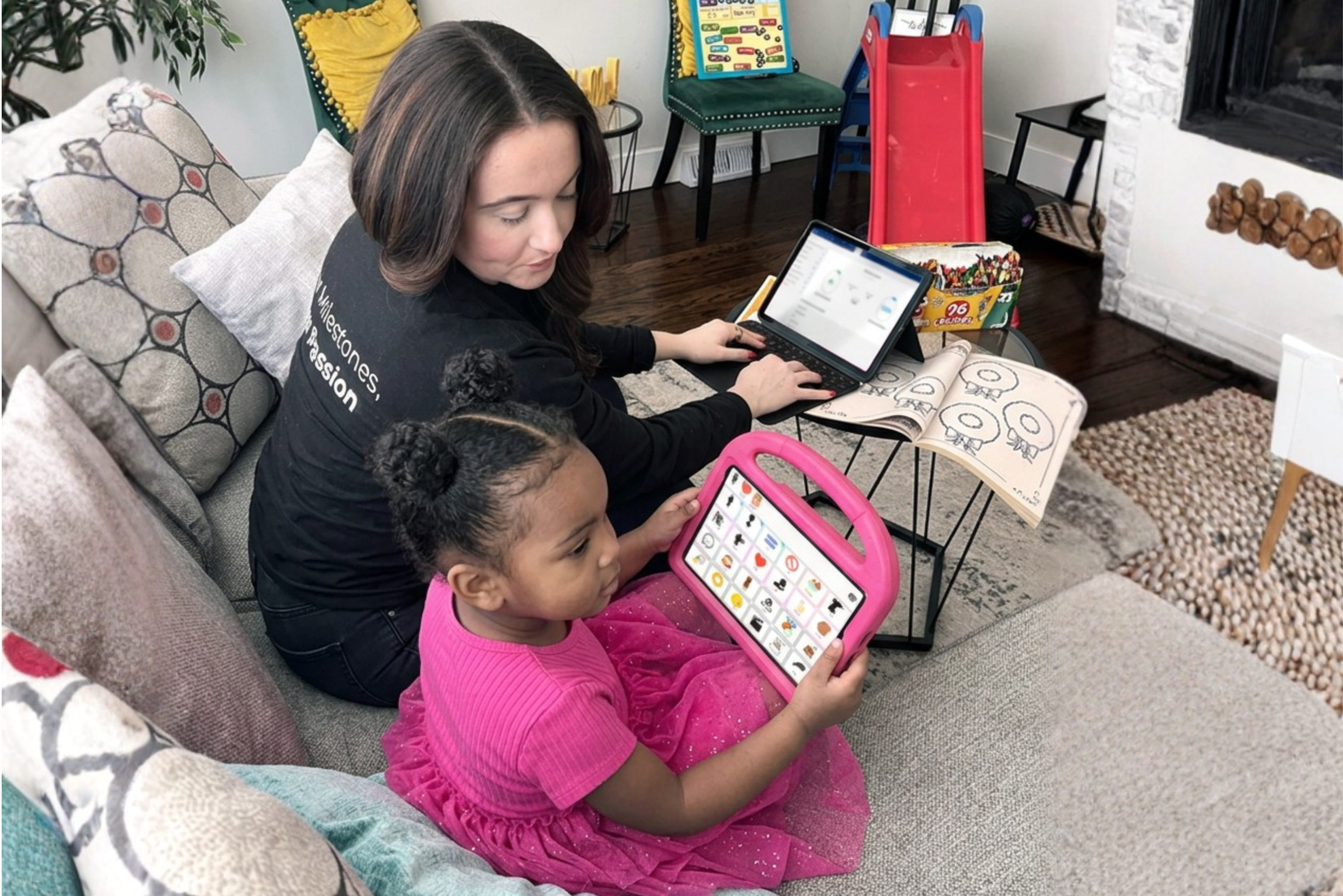
– Use all communication methods (speech, sign, AAC, gestures)
### Work Closely With Your SLP
– Review weekly or monthly targets
– Practice between sessions
– Track what works at home
– Report progress and concerns regularly
– Attend parent coaching sessions
### Manage Expectations
– Progress is slow—celebrate small wins
– Consistency is more important than perfection
– It takes months to years of intensive therapy
– Not all children regain typical speech, and that’s okay
## When to Adjust Your Strategy
Contact your SLP immediately if:
– No progress after 2-3 months of intensive therapy
– Child’s intelligibility is getting worse
– Child is becoming frustrated or refusing therapy
– New behaviors develop (frustration, avoidance)
– You suspect hearing loss or other medical issues
Your SLP should adjust goals, methods, or intensity regularly based on data.
## The Bigger Picture
Childhood apraxia of speech is a real, treatable motor speech disorder. With the right diagnosis, intensive therapy from a trained SLP, and coordinated support from ABA therapists and family, children with CAS make meaningful progress.
Not every child with CAS regains typical speech. But most improve significantly, and many become functionally intelligible speakers. Others use AAC (augmentative and alternative communication) alongside speech, and that’s a valid, effective communication solution.
Your child’s speech journey might look different from other children’s—and that’s okay. What matters is progress *toward your child’s potential*, whatever that looks like.
## Key Takeaways
✓ CAS is a motor speech disorder—not a language or intelligence disorder
✓ Diagnosis requires a specialist—many SLPs don’t diagnose CAS accurately
✓ Intensive speech therapy (2-5x weekly) is necessary for progress
✓ ABA and speech therapy work together to support communication development
✓ Progress is slow and steady—expect months to years of intervention
✓ Every child’s path is different, and all communication methods are valid
—
**Does your child show signs of apraxia?** Our team works with SLPs to coordinate comprehensive therapy. Let’s discuss how ABA combined with specialized speech therapy can support your child’s communication development.
**Related Articles:**
– [ABA vs. Speech Therapy: Which Is Best for Your Child?]
– [How to Know If ABA Therapy Is Working: 5 Signs Parents Should See]
– [Supporting Communication Skills in Children With Autism]
*This article is for informational purposes and should not replace professional medical or therapeutic advice. Consult with a speech-language pathologist for diagnosis and treatment.*
—
**Meta Description (160 characters):** Understand childhood apraxia of speech (CAS) in children with autism. Learn signs, diagnosis, therapy options, and how ABA supports speech development.