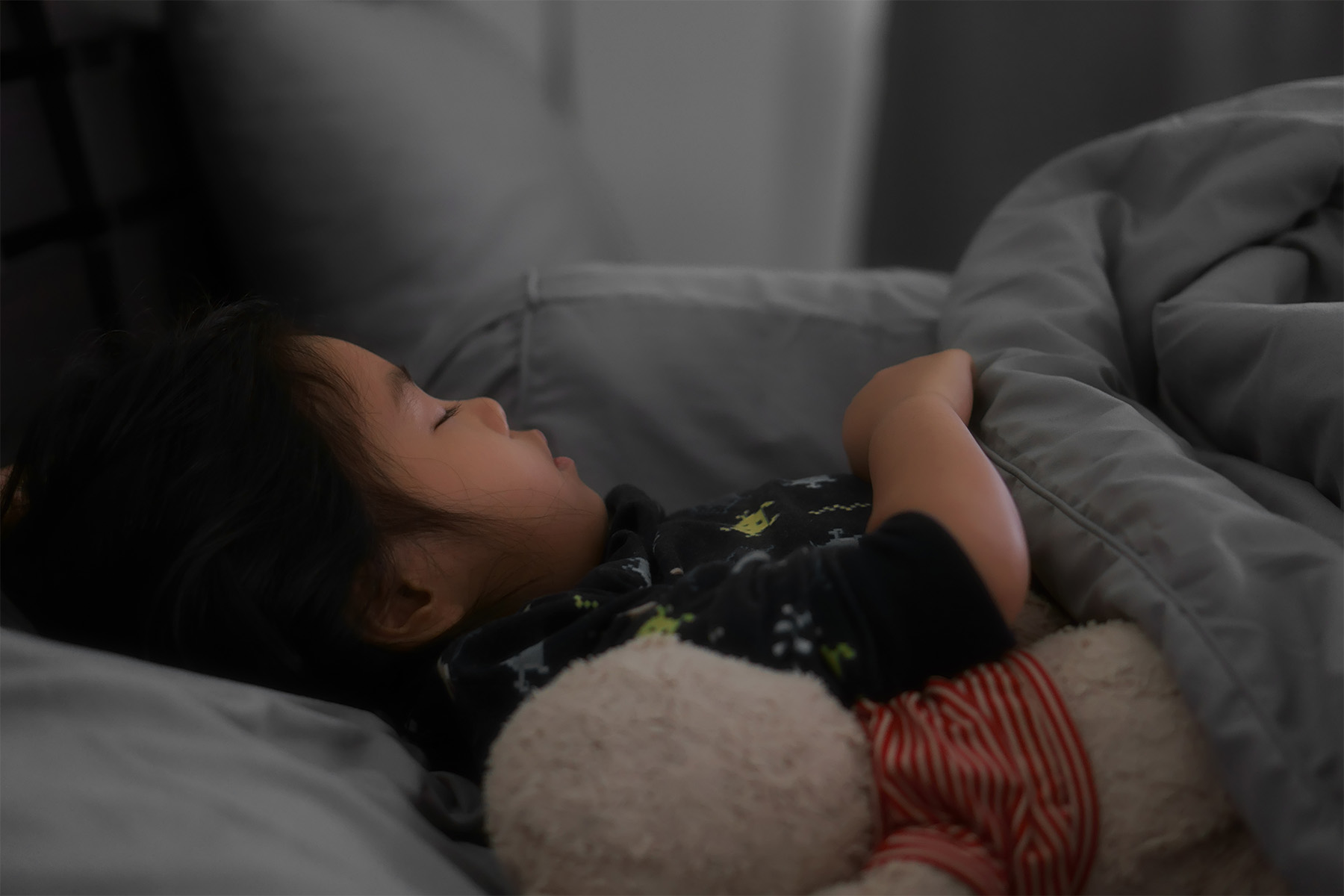
Sleep can be one of the hardest daily challenges for families of children diagnosed with autism. Some children have trouble falling asleep, others wake frequently during the night, and some are early risers who start their day long before the sun comes up.
If this sounds familiar, you’re not alone. Sleep problems are common in autism, but they’re not impossible to manage. With the right structure, environment, and behavior strategies, your child can learn to fall asleep faster, stay asleep longer, and wake up feeling more rested—and your whole family can get a better night’s sleep.
Why sleep can be difficult for children with autism
Sleep challenges often start early and may continue through childhood if they’re not addressed. Understanding why these challenges happen is the first step toward solutions that truly help.
Common sensory and behavioral barriers
Many children with autism experience sensory differences that make sleep harder. The texture of pajamas, the hum of a ceiling fan, or even the flicker of a hallway light can be enough to keep them awake. Others may struggle with anxiety, routines, or transitions—especially when bedtime means separating from parents or ending a favorite activity.
Common barriers include:
- Sensitivity to sound, light, or textures
- Difficulty winding down after stimulation
- Resistance to changing routines or stopping play
- Fear or anxiety about the dark or being alone
- Trouble understanding when or why it’s time to sleep
Recognizing these triggers helps you and your child’s ABA team build a plan that supports comfort, calm, and confidence at bedtime.
How sleep affects behavior and learning
A poor night’s sleep can affect every part of a child’s day. Tired children may have more frequent meltdowns, shorter attention spans, and less patience for change. Over time, lack of rest can make learning and daily routines much harder.
When children begin to sleep more consistently, families often notice:
- Fewer daytime tantrums and smoother transitions
- Better focus and participation during ABA services or school
- Brighter moods and steadier energy
- More consistent progress toward goals
Why ABA strategies can be effective
Applied behavior analysis (ABA) helps families understand patterns: what happens before, during, and after a behavior. ABA therapists use that understanding to create small, achievable steps that build toward better sleep.
Instead of trying to stop a behavior in the moment, ABA focuses on understanding why it happens. If your child calls out after lights out, for example, the plan might include gradual strategies to teach independent falling asleep over time.
Identifying the root causes of sleep problems
Before creating a sleep plan, your ABA team will help identify what’s really causing the issue. Every child’s sleep challenges are unique, and knowing the root cause prevents frustration and unnecessary trial and error.
Sleep onset vs. sleep maintenance issues
There’s a difference between trouble falling asleep (sleep onset) and trouble staying asleep (sleep maintenance). Some children struggle to relax at the beginning of the night, while others fall asleep quickly but wake up often.
Understanding which one your child experiences helps shape the right strategies. For example:
- For sleep onset issues, routines, calming activities, and fading parent presence may help
- For sleep maintenance issues, environmental consistency and reinforcement can encourage falling back asleep independently
The role of environment and routines
The bedroom environment plays a major role in how easily a child falls asleep. A predictable, calm, and dimly lit space helps the body recognize that it’s time to rest.
A few helpful adjustments include:
- Keeping the room cool, dark, and quiet
- Using blackout curtains or white noise
- Having consistent lighting cues (dim lights before bedtime, lights off only when it’s sleep time)
- Turning off screens 30–60 minutes before bed
Bedtime routines are equally important. Doing the same activities in the same order every night—like bath, pajamas, story, then lights out—builds comfort and predictability that helps children relax.
Tracking patterns with sleep data
ABA therapy is data-driven, and sleep is no exception. Your team might suggest a simple sleep log to track:
- Activities that occur before bedtime
- How long it takes to fall asleep
- Number and length of night wakings
- Morning mood or energy levels
Over time, these patterns can show what’s helping, what’s not, and whether something in your child’s routine or environment might be disrupting sleep.
ABA strategies for better sleep
ABA strategies make sleep success achievable, step by step. These techniques focus on predictability, motivation, and reinforcement: three things that help children with autism thrive.
Establishing consistent bedtime routines
Consistency is one of the most powerful tools for improving sleep. Try to:
- Keep bedtime and wake time within the same 30-minute window every day, even on weekends
- Follow the same routine in the same order each night
- Avoid exciting or stimulating activities right before bed
If your child receives home-based ABA, your BCBA can help design a bedtime plan that fits into your family’s evening schedule and feels realistic.
Using visual schedules and reinforcement
Visual supports—like picture cards or bedtime charts—help children understand what comes next. This can be especially useful for visual learners. You might create a simple chart that shows each step: bath, brush teeth, story, bed.
Pair visuals with praise and small rewards to make them meaningful. For example:
- Offer verbal praise or a sticker for completing each bedtime step
- Give a small reward for staying in bed all night
- Use tokens that build toward a larger reward at the end of the week
Gradual fading and sleep shaping techniques
If your child has difficulty falling asleep without a parent nearby, ABA therapists often recommend a “fading” approach. You might start by sitting beside the bed, then move to the doorway, and eventually just outside the room. Over time, your presence decreases while your child’s independence increases.
Sleep shaping works in small steps, too—making gradual changes toward your long-term goal. This might mean shifting bedtime earlier by 10 minutes each night, reducing naps, or adjusting reinforcement schedules to encourage more consistent rest.
Supporting sensory needs at bedtime
Because sensory differences are so common in autism, addressing them can make or break a bedtime plan.
Managing light, sound, and tactile input
The right sensory environment can make a big difference. Try:
- Using blackout curtains to reduce light sensitivity
- Playing white noise or gentle music to block sudden sounds
- Choosing pajamas and bedding with your child’s preferred textures
- Keeping toys or distractions out of the sleep area
Small environmental changes can help your child’s body recognize that it’s time to rest.
Create a calm environment, white noise, and calming activities
Many families find success in promoting relaxation and a calm environment helpful for promoting relaxation. Ensuring your child has preferred textures and weights of blankets can go a long way in ensuring a soothing and calm environment. White noise machines or fans offer consistent sound that reduces startle responses.
Simple calming activities—like reading, gentle stretching, massage, or soft music—can also signal that bedtime is coming and help your child settle naturally.
When to get extra support
Even with structure and consistency, some sleep challenges need extra attention.
When to involve your BCBA
If sleep disruptions start to affect daytime behavior or therapy progress, talk with your BCBA. They can assess patterns, adjust reinforcement systems, or integrate sleep-focused goals into your child’s ABA services.
Coordinating with pediatricians or sleep specialists
Sometimes, medical factors like reflux, allergies, or medication side effects can interfere with sleep. Your BCBA may recommend working with your pediatrician or a sleep specialist to rule out medical causes before changing the behavioral plan.
Adjusting ABA plans to address persistent sleep issues
If sleep challenges continue, your child’s ABA team can create specific goals for bedtime routines, self-calming, or morning transitions. Tracking progress within therapy helps make sure the plan stays effective and individualized.
How ABA therapy sets families up for long-term success
Better sleep develops over time, but with the right support, families see lasting improvements that reach beyond bedtime.
Generalizing routines to new environments
Once your child learns a bedtime routine at home, the next step is applying those same skills in new places. ABA therapy supports generalization—helping children use what they’ve learned while traveling, staying with relatives, or sleeping in a new room.
Empowering parents with data and strategies
Your ABA team will share progress updates and practical tools so you can reinforce good sleep habits between sessions. These strategies empower families to keep routines consistent and positive long-term.
Maintaining sleep progress over time
As your child grows, routines and sleep needs change, but the same principles—structure, reinforcement, and comfort—continue to work. When new challenges appear, your ABA team can help you make small adjustments so your family stays on track.
Supporting your child’s sleep journey with Children’s Specialized ABA
At Children’s Specialized ABA, we know that healthy sleep is the foundation for learning, growth, and family balance. Whether your child is starting ABA therapy or already part of our center-based ABA or home-based ABA programs, we can help build sleep routines that fit your child’s needs and your family’s schedule.
If sleep has been a struggle in your home, you don’t have to handle it alone. Our team will work with you to identify what’s keeping your child awake and create a plan for better rest, one step at a time.
For more resources for parents or to learn how personalized ABA therapy can support better sleep for your child, contact us today.