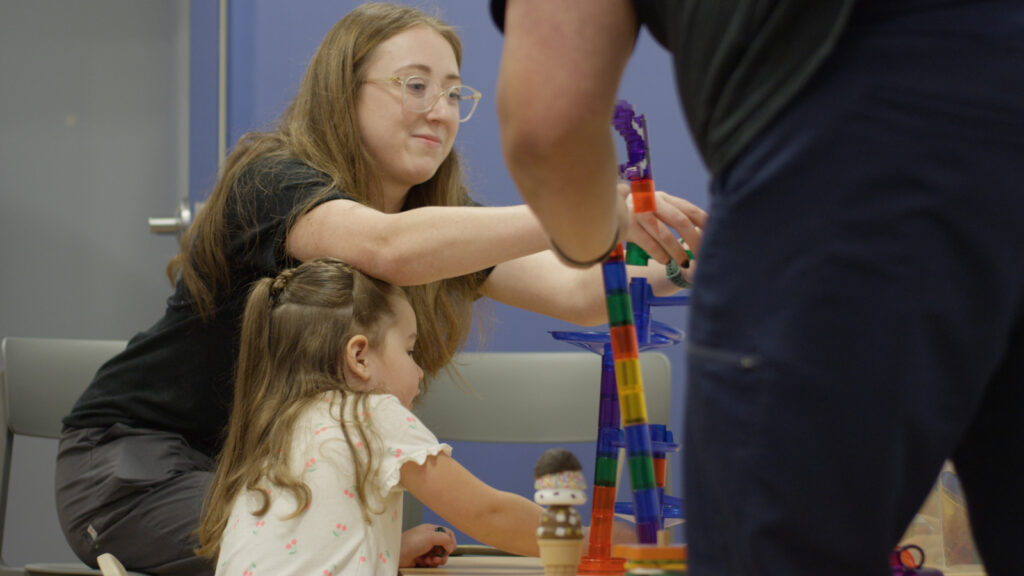
Our Approach: Play-Based, Language-Rich ABA for Children
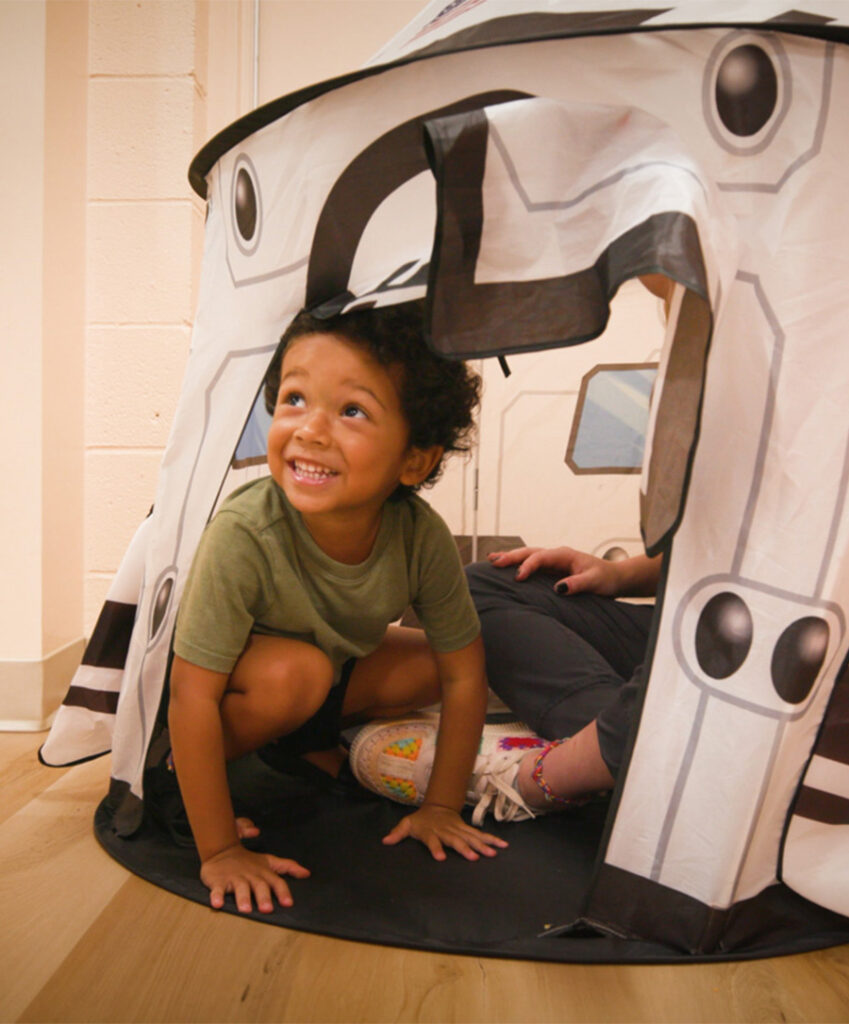
Our Center-Based ABA therapy for children blends evidence-based methods with play to create a fun, engaging learning experience. We specialize in:
- Play-based learning
- Verbal behavior therapy
- Naturalistic environmental teaching (NET)
Each session is designed to strengthen language, social interaction, and communication skills while reducing challenging behaviors. Children learn to express needs, make choices, and participate more confidently in their daily routines.
We also offer in-home ABA services and parent support resources.
Building Social Skills Through Everyday Activities
Children participating in center-based ABA therapy take part in activities that promote social engagement, cooperation, and creativity, including:
- Circle time
- Arts and crafts
- Peer play and group games throughout the day
These experiences encourage turn-taking, sharing, and conversation: skills that build the foundation for lifelong social growth.
Comprehensive and Focused Options
Every family’s schedule and clinical needs are different, which is why we offer flexible center-based ABA program options.
Our team works closely with parents and caregivers to tailor session times and plans to fit what’s best for your child and family.
We also offer in-home ABA services and parent support resources.
Comprehensive Services Under One Roof
In addition to children’s ABA therapy, our centers also provide:
These services are integrated into each child’s care plan, ensuring well-rounded, coordinated support that helps every child thrive.
We also offer in-home ABA services and parent support resources.
Our ABA Therapy Classrooms
At Children’s Specialized ABA, every child’s journey is unique. Our classrooms are designed to be both fun and purposeful, helping children grow through play, learning, and individualized clinical support.
We begin with a comprehensive assessment to place each child in the classroom that best meets their needs. From there, individualized teaching and ongoing support help children build the skills to confidently progress through each level of our program.
Beginning Learners
Children begin with foundational skills like participating in circle time, imitating play, and learning to communicate wants and needs.
Early Learners 1
This stage focuses on connecting through simple interactions, like responding to their name, requesting help, and beginning parallel play.
We also offer in-home ABA services and parent support resources.
Early Learners 2
Children start using short phrases, participating in small group activities, and practicing turn-taking in structured play.
Intermediate Learners
Children strengthen conversation skills, follow group directions, and develop imaginative play.
Advanced Learners
As children prepare for school and beyond, they refine communication, collaborative play, and social problem-solving—skills that help them succeed in structured settings.
We also offer in-home ABA services and parent support resources.
Contact Children’s Specialized ABA
We’re dedicated to helping children on the autism spectrum reach their full potential through compassionate, results-driven ABA therapy.
Our team is here to support your family through every milestone with programs that promote learning, confidence, and joy.
Contact us today at 201.979.0772 or complete our online form to learn more about how our center-based ABA therapy can make a lasting difference in your child’s life.
Need language assistance? We offer interpreter services to support your family, because every child deserves the opportunity to thrive.
We also offer in-home ABA services and parent support resources.
Frequently Asked Questions
What is center‑based ABA therapy and how does it differ from other ABA services?
Center‑based ABA therapy provides Applied Behavior Analysis in a structured clinical setting where children engage in individualized 1:1 instruction alongside peer interaction in play‑rich learning environments. This setting allows for focused teaching with trained professionals and specialized resources designed to support skill development.
What age groups are served by center‑based ABA therapy?
Center‑based ABA services typically support young learners, often beginning as early as 18 months up to around 6 years old, with programs tailored to each child’s developmental level and needs.
What types of skills can center‑based ABA therapy help develop?
ABA therapy aims to strengthen communication, social interaction, language skills, daily living skills, and reduce challenging behaviors through evidence‑based techniques and individualized plans.
What should families expect during a typical center‑based ABA session?
Sessions are structured and may include play‑based activities, guided learning opportunities, group interaction, and one‑on‑one time with therapists using tailored strategies to promote skill building, social engagement, and confidence.
How does center‑based ABA therapy benefit children compared to in‑home therapy?
Center‑based therapy offers a controlled learning environment with access to expert staff, peer modeling, collaborative care, diverse resources, and opportunities for socialization that may enhance skill generalization and readiness for school or community settings.
We also offer in-home ABA services and parent support resources.