Social skills shape so much of your child’s school experience. When your child understands how to connect with peers, communicate their needs, and follow classroom routines, they feel confident and ready to learn.
For many children with autism, these social nuances and skills do not always come naturally. That is where structured, compassionate support makes a world of difference. Applied Behavior Analysis (ABA) therapy offers a clear path to learning social skills, giving your child the tools they need to interact, participate, and truly grow alongside their classmates.
What social skills mean for school success
A typical school day, from classroom instruction to playing at recess, is a constant stream of stimulation and social moments. To best navigate this, your child needs to know how to share space with others, take turns, follow instructions, and effectively communicate.
As these skills develop, we celebrate your child’s big and small wins, including:
- Classroom participation: Feeling comfortable raising a hand or sitting in a circle.
- Peer relationships: Learning the “how-to” of playing and making friends.
- Self-regulation: Understanding their own emotions and how to manage them in a busy environment.
How ABA therapy supports social skills development
Applied Behavior Analysis focuses on understanding and teaching helpful behaviors, which makes it a strong foundation for social learning. Children’s Specialized ABA uses evidence-based techniques that help your child understand how to interact with others, both inside and outside the classroom.
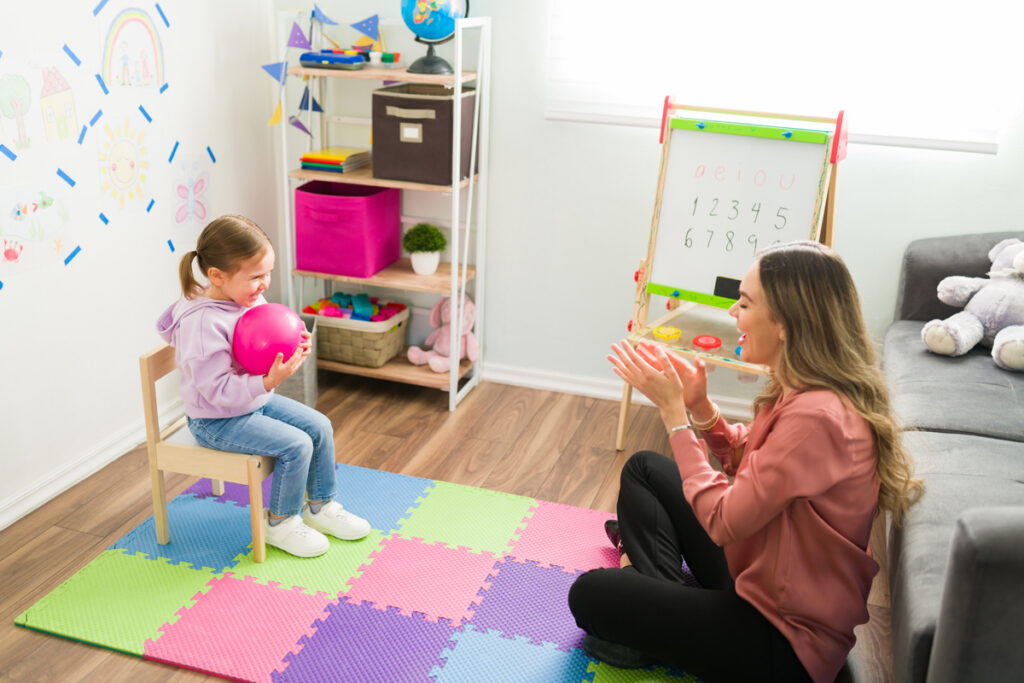
To make these skills easier to learn, therapists use clear examples, positive reinforcement, and repetition to build your child’s confidence. Your child’s personalized care plan is designed to be engaging and supportive, and may include activities such as:
- Role playing: Practicing real-life scenarios, like asking to join a game, in a safe and calm environment.
- Social stories: Simple, visual narratives that explain what your child may see or hear in common school situations.
- Video modeling: Using short videos to show what successful interactions look like.
Key ABA techniques that help children thrive in school
As children grow, the social expectations around them grow too. High-quality ABA therapy services help bridge this gap by using flexible, supportive techniques that meet your child where they are to reach the milestones that matter.
Social skills training
At Children’s Specialized ABA, we practice simple routines your child experiences while at school or during play. Because we use repetition and positive reinforcement, your child learns at a pace that feels comfortable and builds their confidence.
Role playing
Often, children with autism have trouble navigating small moments, such as asking a friend for a crayon. Our therapists conduct role-play activities with your child to build “muscle memory” so they aren’t caught off guard when it happens outside of therapy settings.
Video modeling
Watching a positive example of social interactions helps your child visualize the goal before trying it themselves. This is especially helpful when a child is unsure how to begin a new interaction.
How ABA therapy supports communication in school settings
Communication is the heartbeat of the classroom and presents a unique challenge for any child with autism. This is why Children’s Specialized ABA provides speech therapy in tandem with your child’s unique care plan.
Some focus areas your child’s care team may work on include:
- Asking for a break or a specific item during a lesson.
- Following instructions without feeling overwhelmed.
- Joining group lessons or playtime with more confidence
When your child can confidently ask for help, participate in conversations, and understand directions, they experience less frustration and more success throughout the school day.
Strategies for families and educators to support social skills
Children’s Specialized ABA provides parents and family members with skills and guidance that fit into everyday life in ways that feel familiar and natural. When we work together across home, school, and therapy, your child feels more secure and better prepared for new challenges.
Some helpful strategies include:
- Celebrate the “Try”: Offer specific praise when your child attempts a greeting or shares a toy.
- Use visuals: Prepare your child for the school day with a visual schedule or a quick “preview” of what’s coming next.
- Practicing daily life: Practice turn-taking or simple conversations during everyday moments.
Choosing ABA therapy services for school readiness
Every child has unique strengths and needs, and their ABA therapy program should reflect that. When looking for a provider, prioritize a program that individualizes goals, offers clear communication, and promotes strong family involvement. At Children’s Specialized ABA, we provide:
- Individualized treatment plans: Including coordination with speech and occupational therapies.
- Direct access to experts: Continued collaboration with a Board-Certified Behavior Analyst (BCBA) and trained technicians.
- Meaningful goals: Plans that focus on your child’s communication, social interaction, and school readiness.
- A “whole-child” approach: We consider your child’s developmental, emotional, and social well-being at every step.
We’re ready to help your child build strong social skills with ABA therapy
Social skills shape how children learn, grow, and connect with others, both in school and in their communities. Children’s Specialized ABA provides a nurturing environment where your child works toward mastering these skills through individualized treatment and family-focused guidance.
If you are exploring services to support your child’s social skills, Children’s Specialized ABA is here to help. We will work together to help your child feel ready for every school day ahead.
Frequently asked questions (FAQs)
What is ABA therapy social skills?
ABA therapy social skills programs use structured, step-by-step teaching to help children understand how to interact with others, communicate their needs, and take part in group activities. These programs focus on building confidence by practicing social behaviors in ways that feel clear, predictable, and encouraging.
How does ABA therapy improve communication and peer interactions?
ABA therapy improves communication and peer interactions by using strategies such as role playing, modeling, and positive reinforcement. These techniques help children learn how to greet others, take turns, start conversations, and respond during play. As children practice these steps, they begin to use them more naturally with peers.
What is the 80/20 rule in ABA?
The 80/20 rule in ABA refers to focusing most teaching time on high-impact skills that support a child’s daily life while reserving some time for emerging or less frequent behaviors. This helps children make steady progress in social skills that matter most for school, friendships, and family routines.
What are the key phases of social skills training in ABA therapy?
The four phases of social skills training include assessment, intervention, practice, and generalization. Children are first assessed to understand their strengths and needs, followed by targeted teaching. They then practice these skills through structured activities before learning how to use them in real-world settings.
Read more FAQs about how Children’s Specialized ABA works every day to meet milestones that matter for your child’s independence.