ABA therapy basics in New Jersey start with a simple idea: teach skills that matter in daily life, then practice them where your child actually uses them. For many families, that means home routines, school prep, playtime, mealtime, and the moments between those bigger events. At Children’s Specialized ABA, the goal is not to make therapy feel separate from family life. It is to make progress fit into it.
Parents often want a clear answer before they call for help. ABA, or applied behavior analysis, is an evidence-based approach that uses observation, data, and positive reinforcement to build communication, daily living, social, and safety skills. It is individualized, which means the plan should match your child, your goals, and your routines. If you want the broader clinical foundation, Children’s Specialized ABA explains its applied behavioral analysis therapy services in plain language, and the CDC and NIMH both offer helpful overviews of autism signs, milestones, and supports for families.
For parents in New Jersey, the practical question is usually this: what will this look like on an ordinary Tuesday afternoon? That is what the rest of this guide covers.
What ABA therapy is, and what it is not
ABA therapy is a structured way to teach skills by breaking them into small steps, reinforcing progress, and measuring what changes over time. In a quality program, the focus stays on functional skills. That can mean asking for help, tolerating transitions, following directions, playing with a sibling, brushing teeth, or staying safe near a street or parking lot.
It is also important to say what ABA is not. It is not a one-size-fits-all script. It is not supposed to turn every child into the same version of success. It should not depend on pressure, vague praise, or endless repetition with no purpose. A strong program starts with the child’s strengths, then builds skills that help the child participate more fully at home, in school, and in the community.
Families sometimes ask whether ABA is too narrow because they hear about discrete trials or table work. Those tools can be useful, but they are only part of the picture. A thoughtful plan blends teaching formats so a child can learn in a way that makes sense for the task. If your child is learning to request a snack, the lesson may happen in the kitchen. If the goal is turn taking, the lesson may happen during a puzzle or a board game. The setting matters because the skill should transfer beyond therapy time.
The most useful programs also lean on caregiver collaboration. In other words, the therapist teaches, the parent practices, and the child sees the same expectations in more than one place. That consistency is one reason many families choose Children’s Specialized ABA for in-home care rather than trying to make everything happen in a clinic.
For families looking for a broader service picture, the in-home ABA services page explains how therapy can be built around the child’s natural environment and your family’s schedule.
Why home-based ABA therapy works for many New Jersey families
Home-based ABA therapy gives the team a clear view of what daily life actually looks like. A therapist can observe the morning rush, the snack routine, the toy shelf, the couch cushion the child always jumps on, and the exact transition that tends to create friction. That kind of context is hard to replicate in a clinic room.
For New Jersey families, the benefits can be practical as well as clinical. Commute time drops. Siblings can be part of learning when that is helpful. Parents do not have to pack a bag of supplies for every session. More importantly, the child practices skills in the same rooms where the skills need to work later. That helps with generalization, which is the real test of any ABA goal.
Home-based care can also be a better fit when a child needs help with routines that live at home, not in a therapy center. Toileting, dressing, hand washing, homework stamina, screen transitions, and mealtime behavior are easier to address when the therapist can see the actual setup. A kitchen timer, a bathroom step stool, or the family’s own language for a chore can all become part of the teaching plan.
Children’s Specialized ABA serves families across the state, and the New Jersey locations page is a useful starting point if you want to see where services are available. If you are comparing options in the state, that page can also help you understand how a home-based plan fits into the larger network of services.
Parents sometimes wonder whether home-based ABA is only for children with very specific needs. It is not. Many children benefit from home sessions because the home setting gives the therapist and caregiver more chances to practice real-life routines. That includes children who need help with communication, children who resist transitions, and children who are ready to move from isolated skills to broader independence.
What the first sessions typically look like
The first ABA sessions are usually focused on listening, observing, and building trust. A Board Certified Behavior Analyst, or BCBA, will gather information about the child’s strengths, challenge areas, routines, and family priorities. The initial period often includes parent interviews, direct observation, and baseline data so the team can see what happens before a skill is taught.
That first phase is not about flooding a child with demands. It is about pairing the therapist with positive experiences, understanding what motivates the child, and identifying where support is needed most. Some children warm up quickly. Others need time to watch, explore, and decide that the new adult is safe. Good ABA respects that difference.
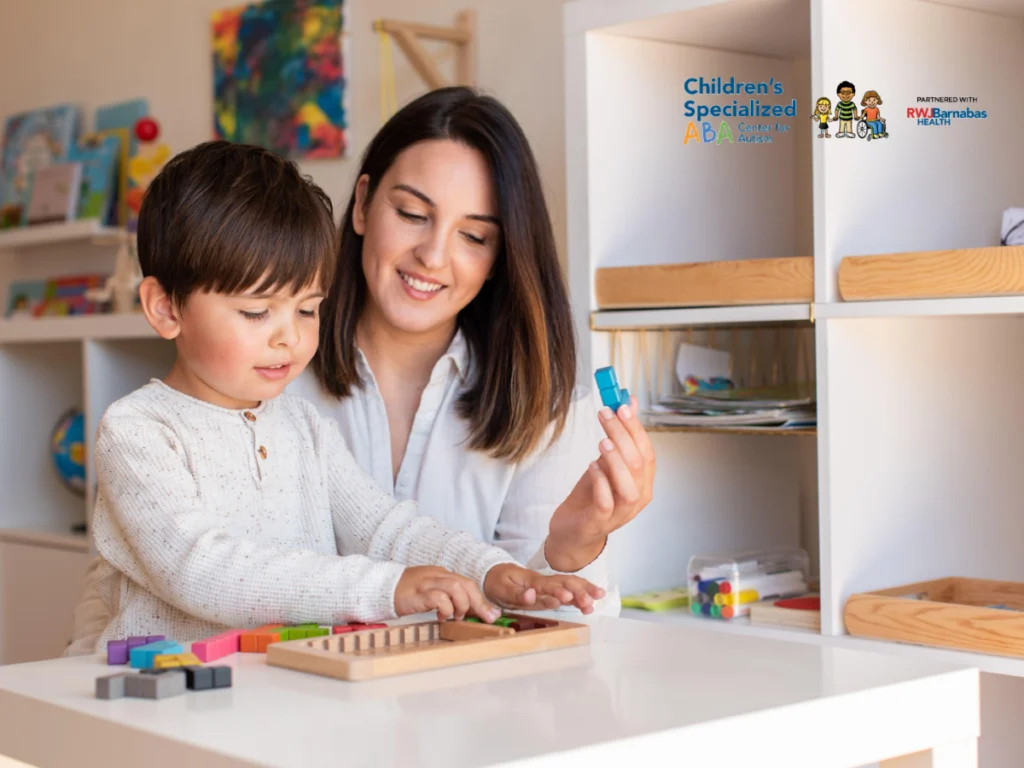
During the first visits, you may see a mix of play, simple instructions, and short teaching opportunities. The therapist might follow your child’s lead with blocks, trains, or pretend play, then introduce a tiny goal like asking for help or waiting for a turn. Data collection will usually happen quietly in the background. That data is what helps the BCBA decide whether a strategy is working or needs to change.
For a visual example of early teaching moments, this type of hands-on interaction is common in home ABA sessions.
The first sessions also give parents a chance to ask direct questions. How will goals be measured? How much parent coaching is built in? What happens if a child has a hard day? Clear answers in the beginning make the rest of the plan easier to follow.
Progress often looks ordinary from the outside. A child can be learning how to share a toy, ask for a break, or wait three seconds longer than yesterday. Those small wins are what make larger gains possible.
How goals are chosen and measured
Strong ABA goals are specific, observable, and useful. Instead of a vague goal like “improve behavior,” the plan should describe exactly what the child will learn and how success will be measured. That may include following a two-step direction, answering a simple request, staying at the table for a set time, or using a communication response instead of crying or grabbing.
Goal selection should always match the child’s current needs and the family’s priorities. For some children, the first priorities are communication and tolerance of transitions. For others, the first priorities are self-care routines, safety skills, or learning to play alongside peers. In a home setting, the therapist can see which skills affect the day most and tailor the plan around that reality.
Measurement matters because it protects children from guesswork. A parent may feel that something is improving, but data shows whether the change is steady or only happening once in a while. In a good program, the BCBA reviews that data often and adjusts the plan as needed. That can mean increasing support, simplifying the task, changing the reinforcement, or moving a skill into a different setting so the child can practice it more naturally.
This is also where broader family education helps. If a child is learning to request help during dressing, parents need the same language the therapist is using. If the goal is to reduce problem behavior during transitions, the caregiver should know what warning signs to watch for and what response to use. Parent coaching keeps the plan from becoming a therapy-room-only skill set.
For families who like to compare developmental progress against a larger clinical picture, the CDC’s autism signs and symptoms and developmental milestones pages are useful references. The NIMH autism overview is another reliable source for families who want a high-level summary of autism spectrum disorders.
How parent coaching keeps progress going between visits
Parent coaching is often the part that makes ABA feel sustainable. A therapist can model a technique in the session, but the child spends most of the week with family. The more comfortable parents are with the plan, the more likely skills will show up outside therapy time.
Good coaching is not a lecture. It is practical and specific. The therapist may show how to give a clear direction, how to wait for a response, how to use reinforcement without overprompting, or how to respond when a child becomes frustrated. The parent practices the step while the therapist gives feedback. Then everyone adjusts the plan if the routine is too hard or too easy.
That kind of support can be especially valuable during routine changes. School starts, holidays, travel, illness, and sibling conflicts can all disrupt a child’s rhythm. A parent who understands the behavior plan can respond consistently instead of rebuilding from scratch every time something changes.
Children’s Specialized ABA often uses this kind of coaching to support families in their own homes, because the long-term goal is not just therapy compliance. It is family confidence. When parents know what to do in the moment, children get more practice, fewer mixed messages, and a calmer environment for learning.
It also helps to choose a team that communicates clearly about progress. Families should know what the target is, what data is being collected, and how the next step will be decided. ABA should feel collaborative, not mysterious.
If you want help starting that process, the best next step is simple: request appointment and ask about in-home services in your part of New Jersey.
When to reach out for help
You do not need to wait for a crisis to ask for support. If your child is struggling with communication, transitions, safety, daily routines, or repeated behavior that is making family life harder, it makes sense to ask questions now. A strong ABA program can help sort out which skills need the most attention and what kind of support fits your home.
Parents in New Jersey also deserve a team that explains services clearly. You should know what assessment will happen, who will provide care, how goals will be tracked, and how family coaching will fit into the schedule. Those details matter because they shape whether therapy is useful in the long run.
Children’s Specialized ABA, partnered with RWJBarnabas Health, offers in-home ABA therapy designed to meet families where they are. If your child needs help with communication, routines, or everyday independence, this is a good time to explore whether the model fits your household.
Families who want to learn more about service availability can start with the in-home ABA services page or review the applied behavioral analysis therapy overview again before taking the next step.
FAQ
Is ABA therapy always done at home?
No. ABA can happen at home, in a clinic, at school, or in community settings. Home-based ABA is often a good fit when the child needs help with routines that happen most naturally in the house.
How long before families see progress?
It depends on the child’s goals, how often therapy happens, and how consistent the practice is between sessions. Some skills show up quickly, while others need steady repetition and coaching over time.
Do parents need to lead every session?
No. Therapists lead the session, but parent participation matters. A good program includes coaching so caregivers can reinforce the same skills when therapy is not happening.
What if my child resists new routines?
That is common. The team can start with small steps, pair new routines with reinforcement, and adjust the pace so the child has time to build trust and tolerance.
How do I start ABA therapy in New Jersey?
Start by contacting Children’s Specialized ABA and asking about assessment, eligibility, and home-based services in your part of the state. The team can help you understand the next steps.