The Critical Window: Autism Signs Between 12 and 36 Months
Autism manifests differently in every child, but certain patterns emerge consistently in toddlerhood. The American Academy of Pediatrics recommends screening all children for autism at 18 and 24 months, not just those with obvious delays.
Social Communication Red Flags
The hallmark of autism involves differences in how children communicate and connect socially. In toddlers, watch for:
- Limited eye contact or gaze sharing. Your child may avoid looking at you during interaction, or fail to direct your attention to something they find interesting (pointing at a bird and looking back to see if you’re looking too).
- Delayed speech or language. While every child develops language at their own pace, autism often involves either no words by 18 months or language that doesn’t progress beyond single words by 24 months. Some autistic children have echolalia: they repeat words or phrases without understanding meaning.
- Difficulty responding to their name. By 12 months, most children turn toward their name. If your toddler consistently ignores their name in typical hearing range, it’s worth mentioning to your pediatrician.
- Limited social interest or engagement. Autistic toddlers may prefer playing alone and show less interest in other children or in sharing experiences with caregivers.
- Reduced reciprocal interaction. Typical toddlers naturally take turns; you smile, they smile back; you wave bye-bye, they imitate. Autistic toddlers may not initiate or reciprocate these social exchanges.
Behavioral and Sensory Patterns
Beyond communication, autism often involves distinctive behavioral and sensory patterns.
Repetitive Behaviors and Restricted Interests
Autistic toddlers frequently engage in:
- Repetitive movements (stimming): hand flapping, spinning, lining up toys, or repeatedly opening and closing doors. While all toddlers are repetitive to some degree, autistic children often engage in these behaviors more intensely and for longer periods.
- Intense, narrow interests: focusing exclusively on wheels, fans, lights, or specific letters while showing little interest in typical age-appropriate toys.
- Insistence on sameness: becoming distressed if routines change, the same route to daycare, the same cup at meals, the same bedtime sequence.
- Unusual object manipulation: spinning objects, arranging them in lines, or stacking obsessively rather than engaging in pretend play.

Sensory Sensitivities
Many autistic toddlers have atypical responses to sensory input:
- Sound sensitivity. Covering ears at typical household sounds (vacuum, doorbell, flushing toilet) or showing intense distress in noisy environments like restaurants or birthday parties.
- Texture aversion. Refusing certain food textures, wearing only specific clothing fabrics, or resisting gentle touch.
- Visual preferences. Focusing intensely on lights, spinning objects, or reflections; tracking moving objects with unusual persistence.
- Seeking intense input. Conversely, some autistic toddlers seek heavy pressure (crashing into things, loving deep pressure), spinning constantly, or showing high pain tolerance.
What Doesn’t Necessarily Mean Autism
Before you worry: autism is one explanation for developmental differences, but not the only one. Consider the full context:
- Speech delay alone may reflect language difference, multilingual exposure, hearing difficulty, or simple late talking (which many children outgrow).
- Shyness around strangers is developmentally typical at 18-24 months and doesn’t indicate autism.
- Not playing pretend yet at 18 months is normal; concern is warranted around 24 months and beyond.
- Being very focused on trucks, dinosaurs, or animals is age-appropriate; the concern is intensity that excludes other interests and prevents social connection.
When to Seek Professional Evaluation: Red Flag Timeline
While each child develops at their own pace, certain milestones can serve as benchmarks. If your child hasn’t met these developmental markers by the ages listed, it’s worth discussing with your pediatrician:
- By 9 months: Not babbling, limited eye contact during games like peek-a-boo, not showing objects to others.
- By 12 months: No single words, not responding to their name, limited gestures (pointing, waving, clapping), no back-and-forth interactions.
- By 18 months: Fewer than 10 words, repetitive play without variation, not pointing to show interest, difficulty with transitions or changes to routine.
- By 24 months: Fewer than 50 words, not combining words, limited pretend play, intense restrictive interests, unusual sensory sensitivities, significant difficulty with self-regulation.
It’s important to remember that development isn’t perfectly linear. Some children progress quickly in one area and slower in another. However, if you notice a significant delay in multiple areas or a sudden loss of skills previously gained (a phenomenon called regression), bring this to your pediatrician immediately.
What Actually Happens in an Early Intervention Evaluation
If you do pursue evaluation through New Jersey’s Early Intervention program or a private provider, here’s what to expect:
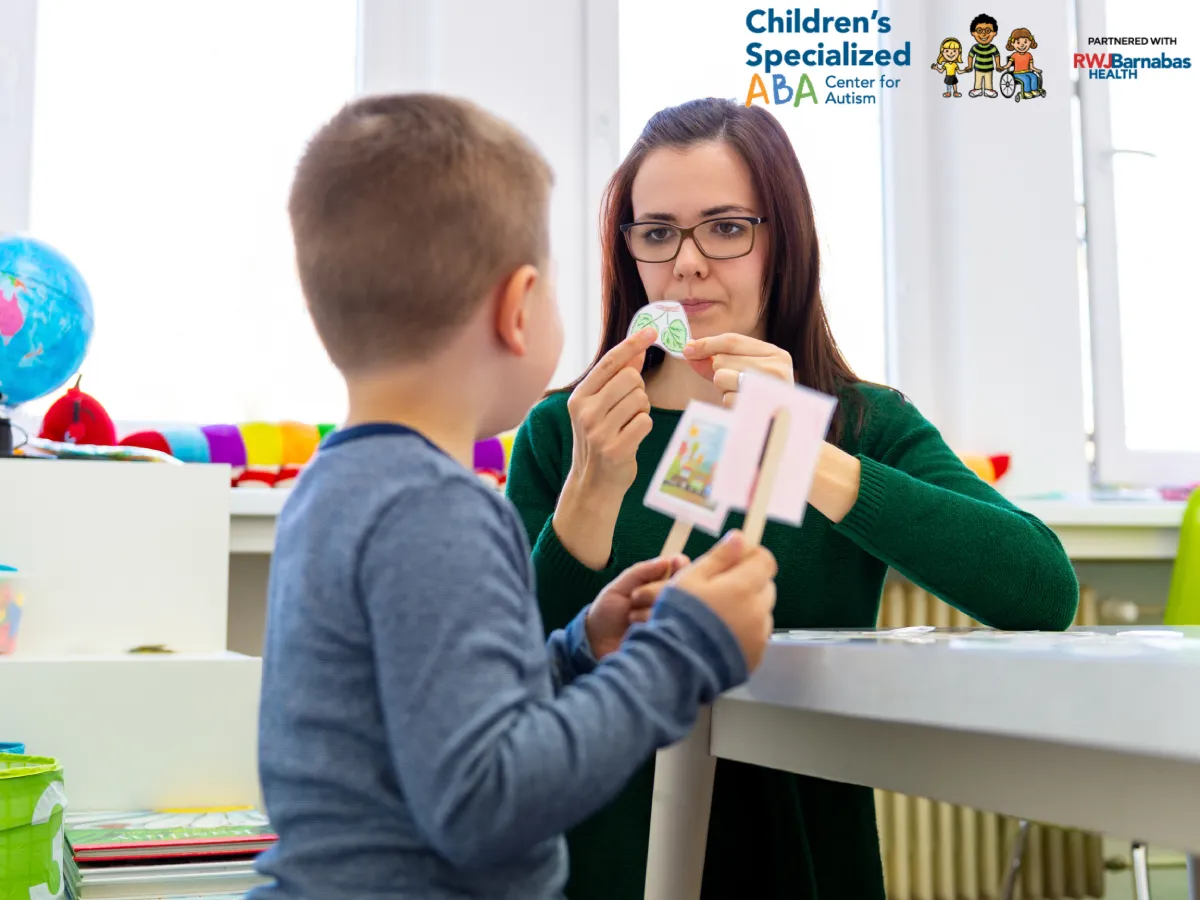
The evaluation process is thorough but family-friendly. A team typically includes a developmental specialist, speech-language pathologist, and occupational therapist. They’ll spend time observing your child playing, noting how they communicate, move, and interact with people and toys. They’ll ask detailed questions about your pregnancy, birth, developmental history (when did they sit up, crawl, walk, say first words), current routines, and family medical history.
Standardized assessment tools used for autism diagnosis include the ADOS-2 (Autism Diagnostic Observation Schedule, Second Edition), which involves structured play activities and observations; the CARS2 (Childhood Autism Rating Scale, Second Edition), a rating system based on observation; and the ADI-R (Autism Diagnostic Interview, Revised), a detailed parental interview. The results are combined with observation to create a comprehensive picture of your child’s strengths, challenges, and needs.
If autism spectrum disorder is identified, the evaluation results will include recommendations for early intervention services: how many hours of therapy per week, what type of services (ABA, speech, occupational therapy), and whether services should be delivered in the home, a clinic, or community settings.
Insurance and Coverage in New Jersey
A major advantage for New Jersey families: autism diagnosis and treatment, especially ABA therapy, is well-covered by most insurance plans and Medicaid.
New Jersey’s FamilyCare (the state’s Medicaid program) covers comprehensive autism services, including diagnostic evaluation, ABA therapy, speech therapy, occupational therapy, and behavioral consultation. Coverage typically begins immediately after diagnosis. Copays and deductibles vary by plan, but many families pay little to nothing out of pocket.
Private insurance plans in New Jersey are required by state law to cover autism diagnosis and treatment. Coverage usually requires prior authorization and may have limits on hours per week, though many plans provide generous coverage, particularly for ABA therapy delivered to children under age 5.
The early intervention program itself (birth to age 3) is publicly funded and free to eligible families. After age 3, services typically transition to school-based services (provided through your local school district at no cost) and/or private services paid through insurance or personal funds.
Practical Tips for Concerned Parents
If you suspect your child might have autism:
- Trust your gut. You know your child better than anyone. If something feels off, it’s worth investigating.
- Document specific behaviors. Keep a brief log: what you observe, when you see it, how often. Phrases like “doesn’t respond to name,” “lines up toys,” “covers ears at loud noises” are much more useful than general concerns like “seems delayed.”
- Get a second opinion if needed. If your pediatrician dismisses your concerns or suggests waiting, don’t be afraid to seek a second evaluation from a developmental specialist.
- Don’t delay. Early intervention changes outcomes dramatically. The difference between starting therapy at age 2 versus age 4 or 5 is profound.
- Connect with other families. Parent support groups (in-person or online) can provide emotional support and practical advice from people who’ve walked this path.
- Educate yourself. Read about autism from reputable sources (BACB, autism organizations, peer-reviewed research), but be cautious with social media and nonevidence-based treatments.
A Note on Neurodiversity and Autism
Modern understanding of autism has evolved significantly. Rather than viewing autism as a defect or tragedy, many in the autism community and supporting professionals recognize autism as a neurodevelopmental difference. Autistic individuals think, process information, and experience the world differently, not worse.
That said, autism spectrum disorder is also real, and children who receive early, intensive, evidence-based intervention show significantly better outcomes in communication, social connection, daily living skills, and independence. The goal of early intervention isn’t to make autistic children “non-autistic.” It’s to give them skills, confidence, and support to thrive in a world that wasn’t designed for how their brain works.
What to Do If You’re Concerned
Step 1: Talk to Your Pediatrician
Your child’s pediatrician is your first port of call. Come prepared with specific examples: “She doesn’t respond to her name,” not “she seems different.” Document timing and frequency. Your pediatrician may use a screening tool like the M-CHAT (Modified Checklist for Autism in Toddlers).
Step 2: Request an Evaluation
If your pediatrician agrees screening is warranted, ask for a referral. In New Jersey, you have options:
- State Early Intervention program (birth to age 3): New Jersey’s early intervention services are available at no cost for eligible children. You can self-refer; you don’t need a doctor’s referral. Call 1-800-322-3223 or visit nj.gov/health/child/ei.
- Private evaluation: A developmental pediatrician, clinical psychologist, or speech-language pathologist experienced in autism can conduct comprehensive assessment.
Step 3: Diagnosis and Treatment Planning
A thorough evaluation includes developmental history, standardized assessments (like ADOS-2 or CARS2), direct observation, and parent interview. The evaluation results guide your treatment plan.
If autism is diagnosed, early intervention with Applied Behavior Analysis (ABA) therapy is transformative. When delivered intensively and early, ABA helps children develop language, social skills, and reduce challenging behaviors. Speech therapy, occupational therapy, and parent coaching are also critical components.
New Jersey Resources and Support
New Jersey Early Intervention Program (Ages Birth-3)
This state-funded program provides evaluations and services at no cost. Early intervention focuses on helping your child reach developmental milestones and supporting your family. Services include speech therapy, occupational therapy, ABA, and more, delivered in your home and community.
Children’s Specialized ABA
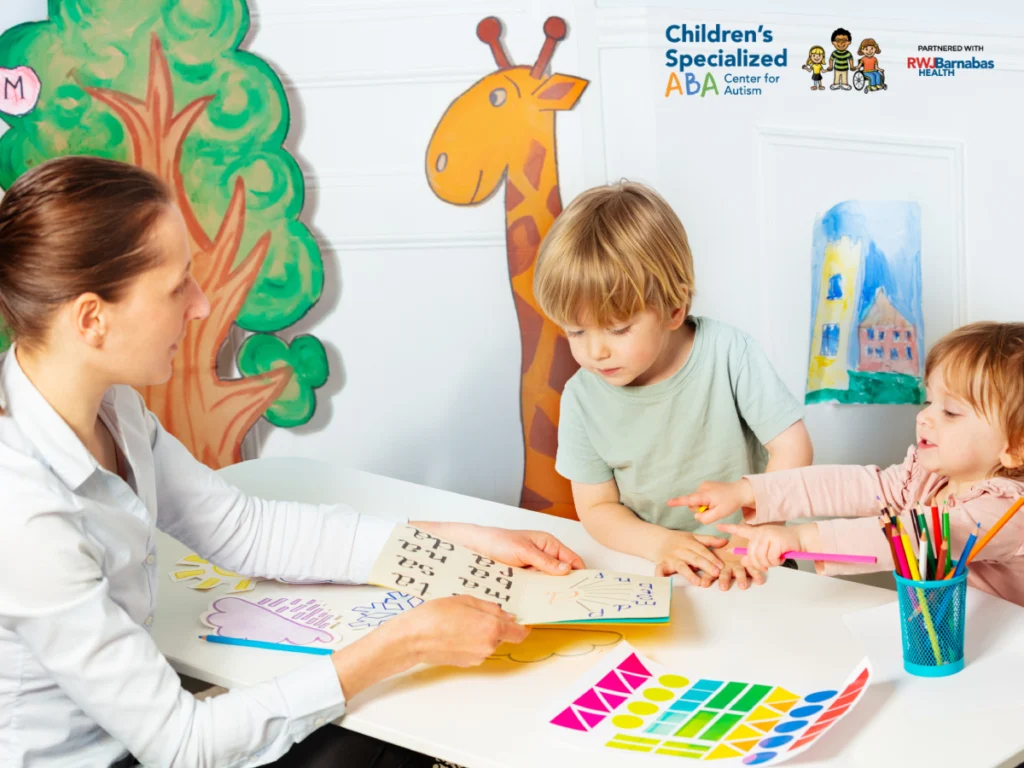
Here in New Jersey, Children’s Specialized ABA provides in-home ABA therapy designed for toddlers and young children newly diagnosed with autism. Our therapists work with your child in the environments where they spend time, home, daycare, parks, using evidence-based ABA techniques to build communication, social skills, and independence. We’re partnered with RWJBarnabas Health, ensuring coordination with your child’s broader healthcare team.
Other Support
- NJ Autism Center of Excellence (Rutgers University): Diagnostic and consultation services
- Parent advocacy groups: New Jersey Center for Autism, Autism New Jersey
- FamilyCare and insurance coverage: New Jersey’s Medicaid program (FamilyCare) covers autism diagnosis and treatment. Most private insurance also covers ABA therapy if medically necessary.
The Importance of Early Identification
Research is clear: early intervention changes trajectories. A child diagnosed and treated at age 2 has a very different prognosis than one who waits until age 5. The plasticity of the young brain means intensive, evidence-based therapy can rewire neural pathways and establish foundational skills for language, social connection, and learning.
But early identification requires parents and pediatricians to notice. You know your child best. If something feels off, if development isn’t progressing as expected, or your child shows several of the signs described above, trust that instinct. An evaluation costs nothing and answers everything.
Frequently Asked Questions
Q: If I get my toddler evaluated and autism is NOT diagnosed, was it a waste of time?
A: No. If your child has developmental delays from any cause, early intervention still helps. And if autism isn’t present, you have answers and can move forward confidently.
Q: How early can autism be diagnosed?
A: Reliable diagnosis typically happens around 18-24 months, though some very severe presentations may be recognized earlier. Before 18 months, developmental evaluation may show delay without naming a specific diagnosis, and that’s okay. Early intervention supports all developmental delay.
Q: Does my child have to have speech delay to have autism?
A: No. Some autistic children are verbal but struggle with pragmatic language (conversation, understanding social context). Some are minimally verbal or nonspeaking. Language ability doesn’t determine autism.
Q: Is autism caused by vaccines?
A: No. Autism is neurodevelopmental, it begins in prenatal development. The correlation between vaccine timing and autism identification is coincidental; the original study claiming a link has been thoroughly debunked and retracted.
Q: Will my autistic child ever be “normal”?
A: Autism is a neurodevelopmental difference, not a disease or disorder to be cured. Early intervention helps autistic children develop skills, communicate, and thrive. Many autistic individuals lead full, independent lives. The goal isn’t to make your child “normal”; it’s to help them reach their potential and live a life that feels good to them.
Next Steps
If you’re concerned about your toddler’s development, take action today:
- Document what you’re noticing. Write down specific behaviors, timing, and frequency.
- Schedule a pediatrician visit. Bring your notes and ask directly about autism screening.
- Know your resources. Children’s Specialized ABA is here to support your family through every step of diagnosis, therapy, and growth. Call 1-800-322-3223 to connect with our New Jersey team today.
Early identification isn’t about judgment or labeling. It’s about understanding your child and giving them the support to grow, learn, and connect. Your instinct matters. Act on it.
Children’s Specialized ABA partners with RWJBarnabas Health to provide evidence-based autism therapy and support for families across New Jersey and Arizona. If you have concerns about your child’s development, reach out. We’re here to help.