
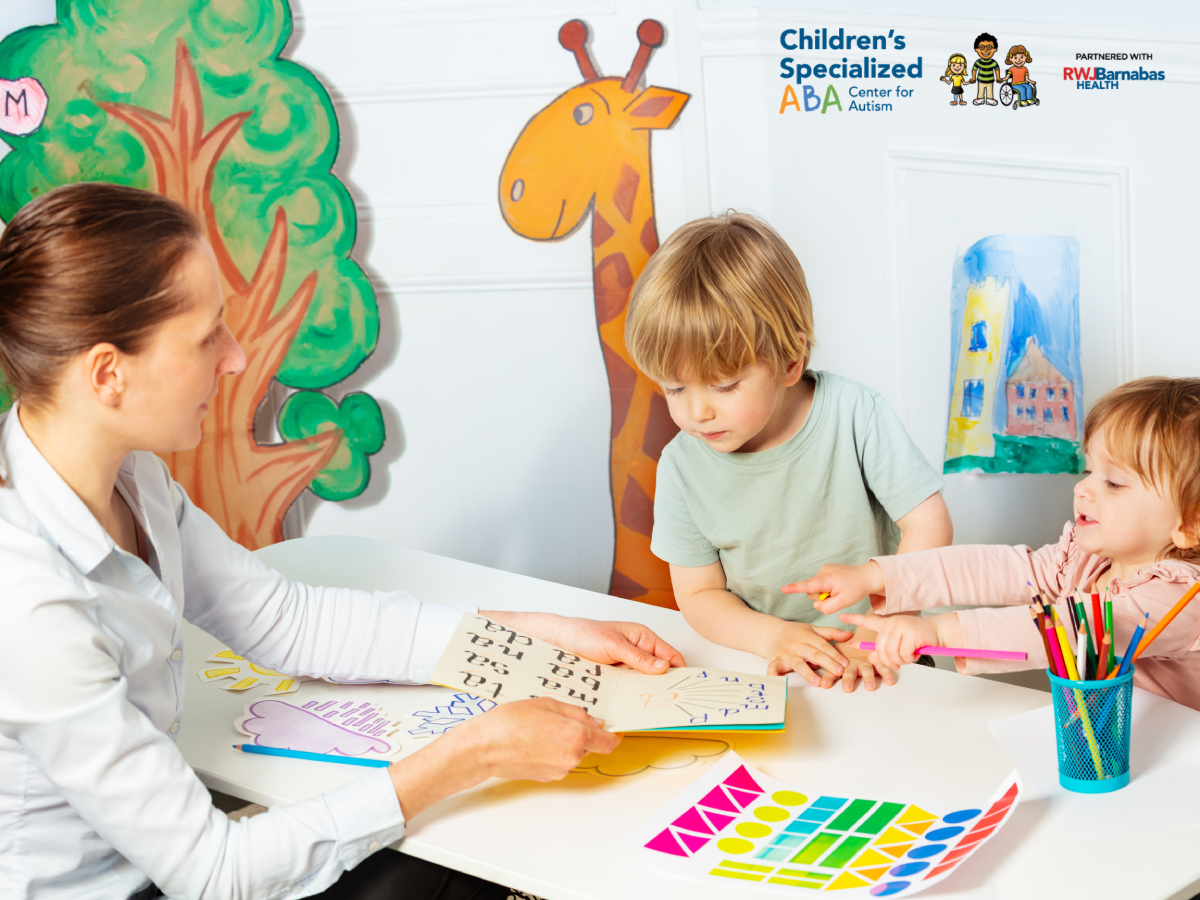
In Applied Behavior Analysis (ABA), one of the most powerful tools we have isn’t confined to the therapy room. It’s in the hands of parents and caregivers. Parent coaching is a cornerstone of evidence-based ABA, and at Children’s Specialized ABA, we’ve seen firsthand how empowering families with coaching transforms outcomes and creates lasting change.
If you’re a New Jersey parent considering ABA therapy for your child, or if you’re already working with a therapist, understanding parent coaching can fundamentally change your family’s experience and accelerate your child’s progress toward independence and social integration.
What Is Parent Coaching in ABA?
Parent coaching is a structured, collaborative process where your ABA therapist teaches you specific strategies to reinforce your child’s learning throughout the entire day. Rather than limiting therapy to scheduled sessions in a clinic or therapy room, parent coaching extends ABA principles into your home environment. Mealtimes, bedtime routines, morning transitions, car trips, grocery shopping, family gatherings. That’s where real, lasting behavior change happens.
The science is clear and compelling: Children make faster progress when their parents are actively involved in the therapeutic process. Research from the Behavior Analyst Certification Board (BACB) and decades of peer-reviewed studies demonstrate that parent-implemented intervention consistently outperforms clinic-only therapy approaches. Studies show that children whose parents are coached in ABA strategies achieve targeted goals 30-50% faster than children receiving therapy alone.
Parent coaching isn’t about turning you into a behavior analyst or making you responsible for therapy. It’s about equipping you with evidence-based tools to recognize teachable moments throughout your day and respond in ways that reinforce the skills your child is learning in formal therapy sessions. It’s a partnership between you, your child, and the therapy team.
How Parent Coaching Works: A Step-by-Step Model
A typical parent coaching model in evidence-based ABA follows a structured progression:
Initial Assessment & Goal Setting
Your child’s ABA therapist observes your child’s behavior in context and learns about your family’s priorities, routines, and concerns. Maybe communication is the biggest challenge at this stage. Perhaps your child struggles with transitions, mealtime behavior, self-care routines like using the toilet or brushing teeth, or social interactions with siblings. Your family’s goals, not a generic rubric, drive the coaching plan.
The therapist partners with you to identify high-priority behaviors to address first, ensuring that coaching focuses on skills that will have the most meaningful impact on your daily life.
Skill Teaching for Parents
Your therapist demonstrates specific techniques in real-time. How to prompt your child, how to deliver meaningful reinforcement, how to manage challenging behavior calmly and consistently. They don’t simply tell you what to do; they show you, then watch you practice, then provide detailed feedback. This cycles through multiple times. This investment of time is essential and is what separates coaching from simple instruction.
You might practice prompting your child to use the bathroom, wait for their attempt, and deliver praise at exactly the right moment. Your therapist watches and provides feedback: “Great timing on the verbal prompt. Next time, try waiting just one more second before helping physically.”

In-Home Practice & Feedback
As your child’s therapist works with them during formal sessions, you’re learning alongside them. You ask questions. You practice techniques in real situations. You get real-time correction and encouragement. The therapist might coach you mid-session: “Notice how you caught that appropriate behavior? That’s exactly the timing and phrasing we want for reinforcement.”
Between sessions, you apply what you’ve learned in your daily routines and report back on what’s working and what feels challenging.
Progress Monitoring & Adjustment
Every week, your therapist measures progress toward goals using data collection and adjusts strategies if needed. Parent coaching is dynamic. What works this month might evolve as your child’s skills develop and new challenges emerge. If progress stalls, the team troubleshoots together: Is the reinforcement meaningful? Are you consistent across situations? Does your child understand what behavior you’re reinforcing?
Generalization & Independence
The ultimate goal is for you to manage these strategies independently, so your child learns that the skills transfer across all environments. Home, school, community, family outings. Not just with a therapist present. This generalization is where real independence begins.
The Science Behind Parent Coaching: Why It Works
Why does parent coaching work so remarkably well? The research points to several critical factors:
Consistency Across Environments
Your child learns that the rules, expectations, and reinforcement are the same at home, in the car, at the grocery store, at school, and in therapy sessions. This consistency accelerates learning dramatically because your child doesn’t have to relearn behavior in each setting.
More Teaching Opportunities
A 10-hour-per-week therapist provides 10 hours of learning opportunity. But parents and caregivers are present 100+ waking hours per week. When you’re coached to recognize and reinforce learning opportunities throughout the day, your child gets exponentially more practice and exposure to learning conditions. Behavior change is a function of practice and repetition. More opportunities mean faster learning.
Motivation Alignment
Your therapist cares about your child’s progress. But parents and caregivers love their children. The emotional investment, the daily commitment, the personal stake. It’s different. When a parent learns to recognize and reinforce their child’s progress, the connection deepens, and motivation increases on both sides.
Sustainability of Gains
Therapy eventually ends. A therapist moves on to support other families. But parent-coached skills can last a lifetime if you maintain the strategies after formal therapy concludes. You become your child’s long-term support system, not dependent on ongoing professional intervention.
The BACB, which certifies behavior analysts and sets standards for the field, has made parent coaching a core competency in ABA training because the evidence is overwhelming and consistent across decades of research.
Real-World Parent Coaching: A Case Study
Let’s look at a real example (details changed for privacy):
Maria’s Story: Maria’s 4-year-old son, Lucas, had minimal spoken language and would cry intensely during transitions. Leaving the park, finishing a meal, changing activities. It was emotionally exhausting for Maria and limited what the family could do together.
Lucas’s ABA therapist worked with him on “first-then” language (“First, we clean up toys, then we go to the car”) and providing advance warnings for transitions. Progress was slow because at home, Maria defaulted to distraction or avoidance strategies to prevent meltdowns. The therapy room wasn’t matching the home environment.
The therapist started coaching Maria. They practiced together multiple times per session:
- How to deliver the “first-then” language clearly
- How to wait for Lucas to transition (being patient with his pace)
- How to reinforce transitions with genuine praise: “You did it! You followed the direction!”
They also coached Maria on what NOT to do: no distraction, no negotiation, consistent follow-through.
Within 3 weeks, Lucas was spontaneously using “first-then” words himself. Within 8 weeks, transitions that once led to tears were relatively smooth. Some days were still challenging, but meltdowns became the exception rather than the rule.
Why such rapid progress? Because Maria was coaching Lucas dozens of times per week, not just the therapist’s 3 hours. Every transition became a learning opportunity. Consistency compounded progress.
Parent Coaching in New Jersey: Insurance, RWJBarnabas Partnership & Accessibility
In New Jersey, parent coaching is a covered benefit under NJ FamilyCare (Medicaid) when delivered as part of an ABA program. Many private insurance plans also recognize its value and cover it because the evidence is strong: families who engage in parent coaching achieve outcomes faster and at lower overall cost.
Children’s Specialized ABA is proud to partner with RWJBarnabas Health to serve New Jersey families. RWJBarnabas is a trusted name in healthcare across New Jersey, and our partnership ensures that families have access to evidence-based ABA therapy with qualified parent coaching.
Our therapists are trained in evidence-based parent coaching models, including techniques from Pivotal Response Treatment (PRT) and natural environment teaching (NET), which integrate learning into your family’s daily routines.
If cost is a concern, ask directly about coverage. In many cases, parent coaching is covered at the same rate as direct therapy sessions, making it an accessible addition to your child’s program.
Common Concerns Parents Raise About Parent Coaching
“Won’t I mess it up if I don’t get the strategies exactly right?” No. Behavior change happens gradually through repeated practice and consistency. If you’re 70% consistent with a strategy, your child is learning. If you’re 90% consistent, progress accelerates. Perfection isn’t the goal; consistency and patience are. Your therapist will coach you through mistakes and adjust strategies as you practice.
“I don’t have time to add parent coaching to my routine.” Parent coaching doesn’t require adding new activities to your life. It’s integrating ABA strategies into routines you’re already doing: mealtimes, getting dressed, leaving the house, bedtime. You’re not creating extra work; you’re shifting how you engage in existing routines to create more learning opportunities.
“My child behaves differently with me than with their therapist. Will coaching even help?” This is extremely common and actually a sign that parent coaching will be especially valuable. Children often behave differently across people and settings. Parent coaching helps close that gap by teaching you the same strategies, so your child learns that the behavior expectations are consistent regardless of who’s interacting with them.
“What if I disagree with the coaching approach?” Good ABA therapists listen and explain their reasoning. If you have concerns about a strategy, voice them. A quality ABA program is collaborative. If an approach truly conflicts with your family values, you and your therapist should discuss alternatives or modifications that align with your priorities.
“How will I know if parent coaching is actually working?” Your therapist should be measuring progress on specific behaviors each week and sharing data with you. You should also notice improvements in your daily life: fewer meltdowns, more communication attempts, better compliance with routines. Ask your therapist to show you the progress data regularly.
Making Parent Coaching Work for Your Family: Practical Tips
Here’s what sets successful families apart in their parent coaching journey:
Show up with curiosity, not judgment. Come to coaching sessions ready to learn, not to defend how things are currently done. Growth requires openness to new approaches.
Practice between sessions. Coaching isn’t just learning; it’s applying what you’ve learned in real situations. The more you practice, the faster you’ll see results and the more confident you’ll become in your skills.
Ask questions constantly. If you don’t understand why a strategy is used or how to apply it, ask. Your therapist should explain the “why” behind strategies, not just the “what”. This helps you troubleshoot when things don’t go as planned.
Track what’s working. Many successful families keep simple notes: “This week, Lucas used 3 new words during mealtime,” or “He stayed at the table for 5 minutes without leaving.” Progress tracking keeps you motivated and helps your therapist fine-tune coaching.
Celebrate small wins. Parent coaching is a marathon, not a sprint. Notice improvements, even small ones. Did your child attempt the behavior for the first time? That’s worth celebrating. Did they do it faster or with less prompting than last week? That’s progress.
Involve other caregivers. If your child spends time with grandparents, babysitters, or teachers, ask the therapist to coach them too. Consistency across ALL caregivers multiplies effectiveness.
Getting Started with Parent Coaching in New Jersey
If you’re ready to explore ABA with parent coaching for your child, here’s the next step:
Talk to an ABA professional and ask directly: “Is parent coaching part of your model?” A strong ABA program should prioritize parent involvement from day one. Ask these specific questions:
- How many hours per week are allocated to parent coaching?
- How do you measure my progress as a parent coach?
- What support and feedback will I receive?
- Is parent coaching covered by insurance, or is there an additional cost?
At Children’s Specialized ABA, parent coaching is woven into every child’s treatment plan. We’re here to partner with you, not replace you. Your involvement is not optional. It’s essential to your child’s success. And we’ll coach and support you every step of the way. Learn more about our in-home ABA therapy services in New Jersey.
Frequently Asked Questions About Parent Coaching
How long does it take to become proficient as a parent coach? Most parents become comfortable with basic strategies within 2-4 weeks of consistent coaching and practice. More complex behaviors may take longer. Remember: you don’t need to be an expert. You need to be consistent and willing to learn.
Can parent coaching replace direct therapy? No. Parent coaching supplements direct therapy; it doesn’t replace it. Your child needs both: direct instruction and modeling from a certified behavior analyst and practice with you at home and in community settings.
What if my child receives ABA at school? Can school teachers and aides be coached too? Yes! In fact, coordinating between home and school is powerful. Some families work with their therapist to share strategies with school staff so the child receives consistent reinforcement and expectations everywhere.
How much does parent coaching cost? In New Jersey, parent coaching delivered as part of an ABA program is often covered by insurance (NJ FamilyCare, private plans) at the same rate as direct therapy. Always verify with your insurance company and ABA provider about coverage details.
What if parent coaching isn’t working or progress has stalled? Parent coaching effectiveness depends on consistency, the right strategies for your child, and strong therapist support. If progress stalls, discuss it openly with your therapist. Sometimes tweaks to the strategy, more intensive coaching for you, or a different approach is needed. It’s collaborative problem-solving.
Can parent coaching help with multiple children in the family? Yes. Parent coaching strategies often generalize to siblings and can improve family dynamics overall. Some families find that consistency and positive reinforcement benefits their entire household.
The Bottom Line: Your Role Is Essential
Parent coaching in ABA isn’t an add-on or optional component. It’s the foundation of effective, sustainable progress. Your involvement accelerates learning, ensures skills transfer to real-life settings, and builds your confidence as an advocate for your child.
If you’re exploring ABA therapy for your child in New Jersey, make parent coaching a non-negotiable part of the conversation. Ask about it. Prioritize it. Engage fully.
Your child’s progress depends not just on the therapist’s expertise, but on your consistency, your willingness to learn, and your commitment to practicing new strategies every single day.
At Children’s Specialized ABA, we’re here to partner with you. We’ll coach you, support you, celebrate your child’s progress alongside you, and empower you with the skills to sustain gains long after therapy ends.
Ready to learn more about parent coaching and how it can transform your family’s life? Request an appointment with one of our parent coaching specialists today.